
Introduction
India’s classical dances represent a blend of art, spirituality, and storytelling 🎭. Rooted in the Natya Shastra, these dances use codified gestures, expressions, and movements to convey emotions and narratives.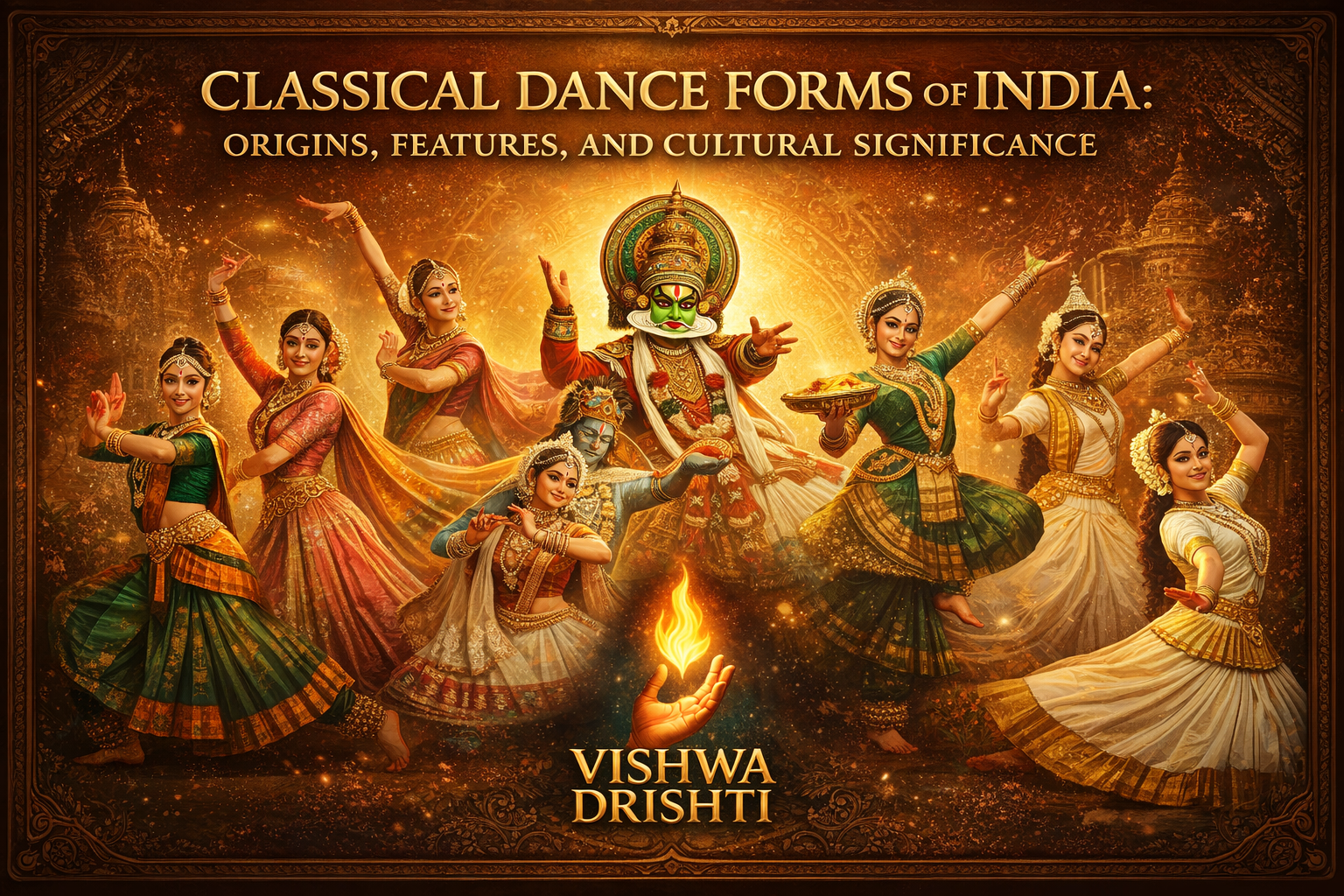
Classification Table
Dance Form State Origin Key Features Bharatanatyam Tamil Nadu Temple dance Strong footwork, Mudras Kathak Uttar Pradesh Storytelling tradition Spins, footwork Kathakali Kerala Temple & folk art Makeup, expressions Kuchipudi Andhra Pradesh Dance-drama Tarangam Odissi Odisha Temple rituals Tribhangi posture Manipuri Manipur Ras Leela Graceful movements Mohiniyattam Kerala Temple dance Feminine style Sattriya Assam Vaishnav monasteries Devotional dance
| Dance Form | State | Origin | Key Features |
|---|---|---|---|
| Bharatanatyam | Tamil Nadu | Temple dance | Strong footwork, Mudras |
| Kathak | Uttar Pradesh | Storytelling tradition | Spins, footwork |
| Kathakali | Kerala | Temple & folk art | Makeup, expressions |
| Kuchipudi | Andhra Pradesh | Dance-drama | Tarangam |
| Odissi | Odisha | Temple rituals | Tribhangi posture |
| Manipuri | Manipur | Ras Leela | Graceful movements |
| Mohiniyattam | Kerala | Temple dance | Feminine style |
| Sattriya | Assam | Vaishnav monasteries | Devotional dance |
Detailed Explanation of Each Dance Form
1. Bharatanatyam (Tamil Nadu) 💃
-
Oldest classical dance form
-
Based on Bhakti tradition 🙏
-
Revived by Rukmini Devi Arundale
2. Kathak (North India 🌀)
-
Originated from Kathakars (storytellers)
-
Influenced by Mughal courts 🏰
-
Famous exponent: Birju Maharaj
3. Kathakali (Kerala 🎨)
-
Known for elaborate costumes & makeup
-
Focus on facial expressions (Rasa) 😮
-
No verbal dialogue
4. Kuchipudi (Andhra Pradesh 🎭)
-
Dance-drama tradition
-
Includes Tarangam (plate dance)
-
Founded by Siddhendra Yogi
5. Odissi (Odisha 🌀)
-
Characterized by Tribhangi posture
-
Linked to Jagannath temple traditions 🛕
-
Revived by Kelucharan Mohapatra
6. Manipuri (Manipur 🌸)
-
Focus on Ras Leela themes
-
Gentle and devotional movements
7. Mohiniyattam (Kerala 🌼)
-
Feminine dance form
-
Graceful swaying movements
8. Sattriya (Assam 🕉️)
-
Originated in monasteries (Satras)
-
Founded by Sankardev
Importance of Classical Dances 🌍
-
Preserve India’s cultural heritage 🏛️
-
Promote spiritual and moral values 🙏
-
Medium of storytelling (Epics & Puranas) 📖
-
Boost tourism & cultural diplomacy ✈️
Challenges ⚠️
-
Declining interest among youth
-
Commercialization
-
Limited institutional support
Way Forward 🚀
-
Integrate into education 🎓
-
Promote via digital platforms 💻
-
Provide scholarships & support 💰
Conclusion 🧾
India’s classical dances are living traditions reflecting its rich culture and spirituality. Preserving them is essential for maintaining national identity
Mains Value Addition
Quote for Essay/Answers
"“Dance is the hidden language of the soul.” – Martha Graham"
Key Data & Statistics
Idia officially recognizes 8 classical dance forms. Most are derived from the principles of Natya Shastra. These dances evolved between 200 BCE and 1000 CE.
Committee / Case Law
Sangeet Natak Akademi recognizes classical dance forms in India., Ministry of Culture promotes preservation through schemes like Kala Sanskriti Vikas Yojana.