
Introduction
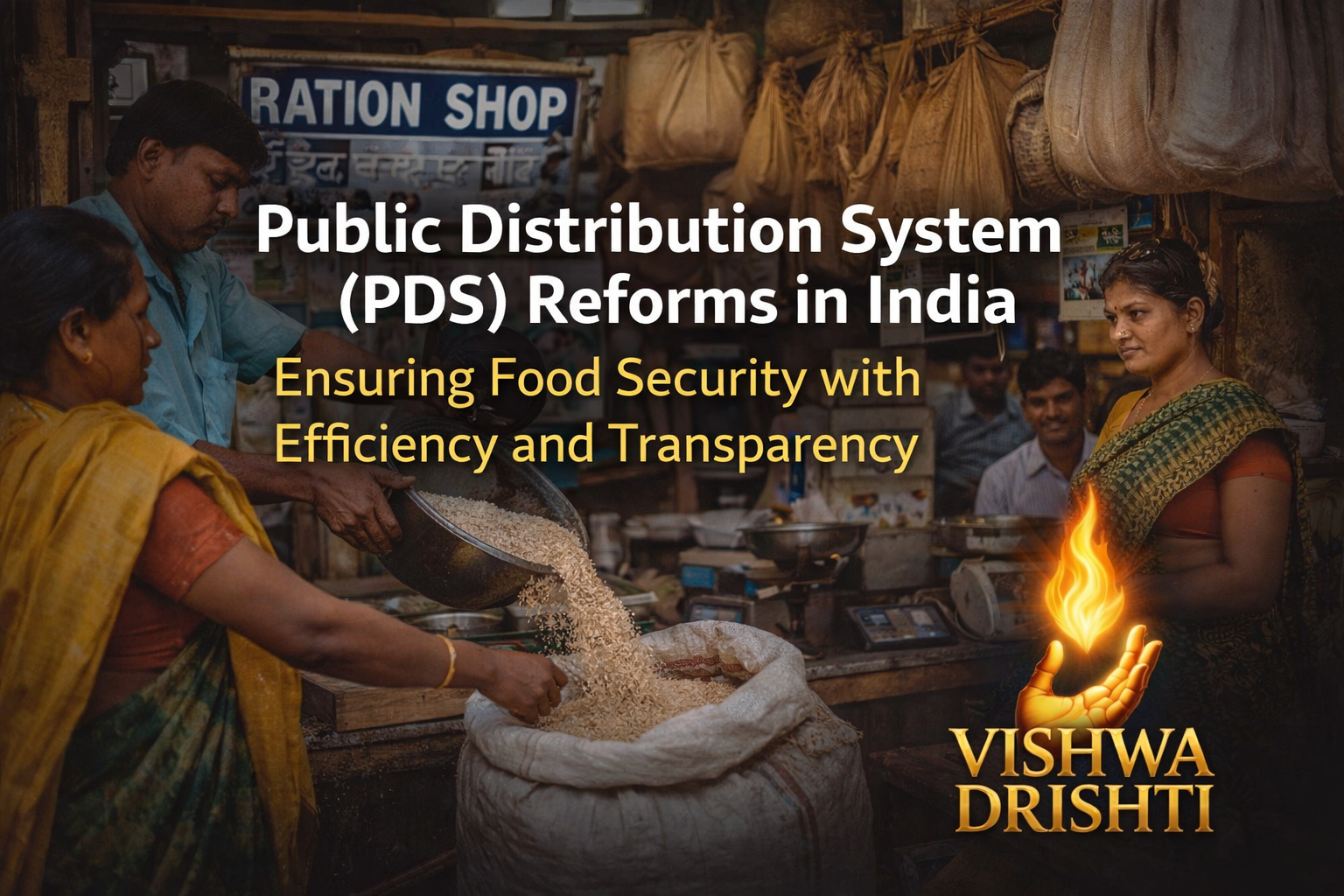
The Public Distribution System (PDS) is one of India’s most significant food security mechanisms, aimed at providing subsidized food grains to vulnerable sections. Strengthened under the National Food Security Act (NFSA), 2013, it plays a critical role in ensuring nutritional security, reducing poverty, and stabilizing food prices.
However, inefficiencies such as leakages, inclusion errors, and corruption have historically undermined its effectiveness, necessitating systemic reforms.
Evolution of PDS in India
| Phase | Key Features |
|---|---|
| Pre-1992 | Universal PDS, urban-focused |
| 1992–1997 | Revamped PDS targeting backward areas |
| 1997–2013 | Targeted PDS (TPDS) with BPL/APL classification |
| Post-2013 | NFSA-based legal entitlement system |
Objectives of PDS
- Ensure food security for vulnerable populations
- Stabilize food prices
- Reduce malnutrition and hunger
- Support agricultural producers through procurement
Key Features under NFSA
| Component | Details |
|---|---|
| Coverage | ~67% of population |
| Entitlement | 5 kg/person/month (priority households) |
| Price | ₹1–₹3 per kg for grains |
| Special Groups | Antyodaya Anna Yojana (AAY) households |
Challenges in PDS
1. Leakages and Diversion
- Significant portion of grains diverted to the black market
2. Inclusion & Exclusion Errors
- Non-poor beneficiaries included
- Genuine poor excluded
3. Infrastructure Issues
- Poor storage → wastage
- Inefficient supply chain
4. Lack of Transparency
- Manual systems prone to corruption
Recent Reforms in PDS
1. Digitization of PDS
- Digitized ration cards
- Online tracking of food grains
2. One Nation One Ration Card (ONORC)
- Portability across states
- Helps migrant workers access food anywhere
3. Aadhaar Seeding
- Reduces duplication and fake beneficiaries
4. Direct Benefit Transfer (DBT)
- Cash transfer in place of food grains (in some regions)
5. End-to-End Computerization
- From procurement to distribution
Impact of Reforms
| Indicator | Before Reforms | After Reforms |
|---|---|---|
| Leakages | High (~40%) | Reduced significantly |
| Transparency | Low | Improved via digital tracking |
| Accessibility | Location-bound | Portable (ONORC) |
| Efficiency | Manual | Automated |
Way Forward
- Universalize ONORC with full portability
- Strengthen grievance redressal mechanisms
- Improve storage infrastructure (warehousing)
- Gradual shift to nutritional security (pulses, millets)
- Balance between DBT and in-kind transfers
Conclusion
The Public Distribution System remains a cornerstone of India’s welfare architecture. While reforms have significantly improved efficiency and transparency, continuous innovation and monitoring are essential to ensure that the benefits reach the intended population, thereby strengthening inclusive growth and social justice.
UPSC PYQ & Mains Practice
Discuss the role of Public Distribution System in ensuring food security in India. What reforms are needed to make it more effective?